By FcForged Editorial Team
What does staggered mean for wheels?
Staggered wheels have different front and rear dimensions, usually in width and sometimes in diameter.
A common arrangement uses wider rear wheels and narrower front wheels. The diameter can be the same at both ends, so matching front and rear diameters do not necessarily mean the wheels form a square setup. Compare the width as well as the diameter.
The term also appears in descriptions of tires and complete wheel-and-tire packages. Read the wheel dimensions and tire sizes separately so you know which parts differ. A listing that says “staggered” still needs to identify the front and rear sizes; the label alone does not describe the complete setup.
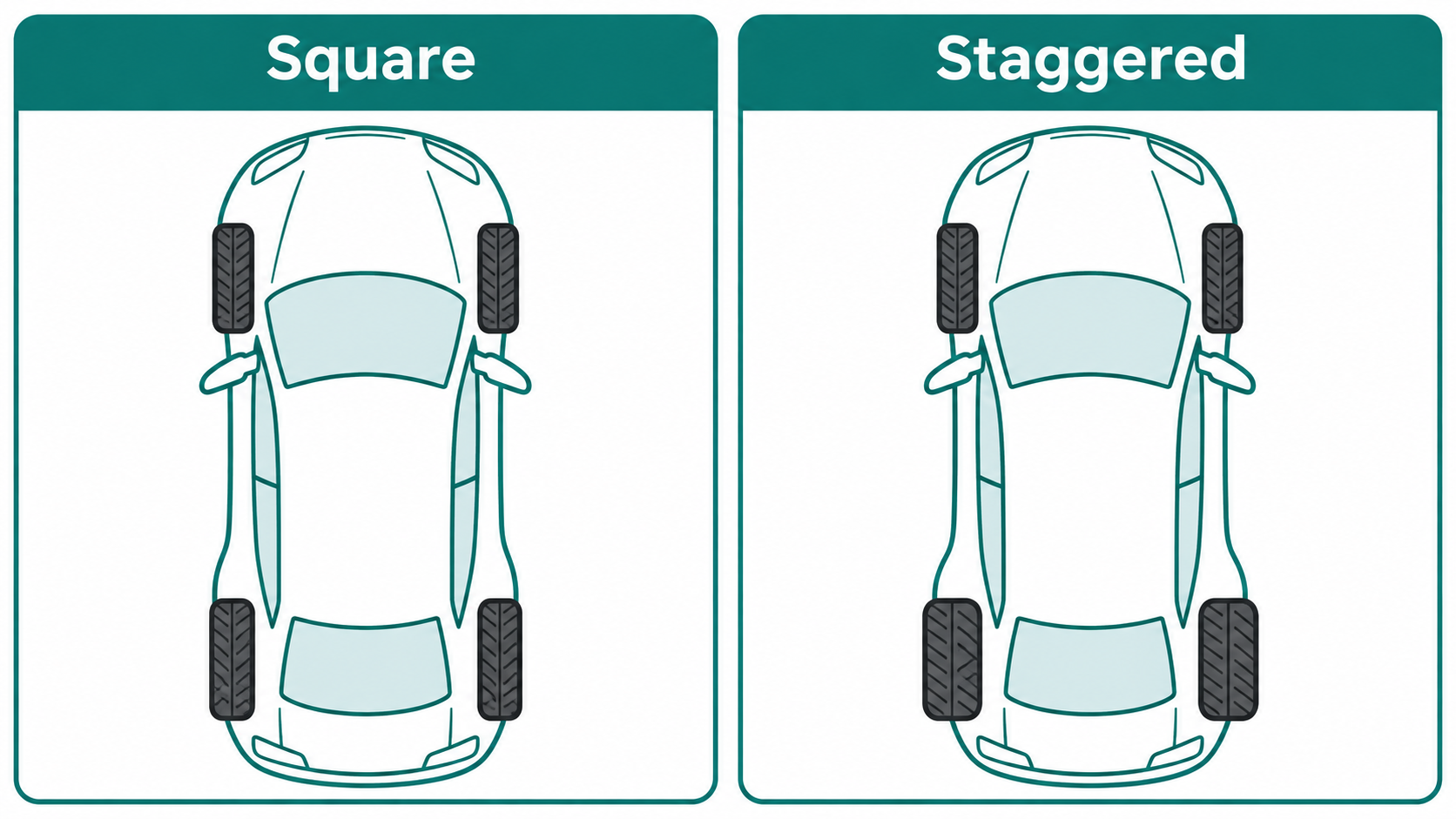
Staggered vs. square: what changes?
A square setup uses the same wheel and tire sizes at each corner, while a staggered setup uses different front and rear sizes that can limit tire rotation.
The practical difference is easiest to see by separating wheel dimensions from tire-rotation options.
| Detail | Square setup | Staggered setup |
|---|---|---|
| Wheel dimensions | Matching front and rear diameter and width | Different front and rear width, diameter, or both |
| Tire sizes | Matching sizes at each corner | Check the front and rear tire sizes separately |
| Front-to-rear tire rotation | May be possible, depending on the tires and applicable instructions | Not possible when the front and rear tires are different sizes |
Tire design matters as well as size. Tire Rack explains that a staggered setup with different front and rear tire sizes prevents front-to-rear rotation. Non-directional tires may still be exchanged across the same axle, while directional tires add restrictions.
Before moving a mounted wheel-and-tire assembly, check the instructions for the vehicle and tires. The terms square and staggered describe the arrangement, but they do not provide a complete rotation plan for a particular vehicle.
Three FcForged builds with different front and rear sizes
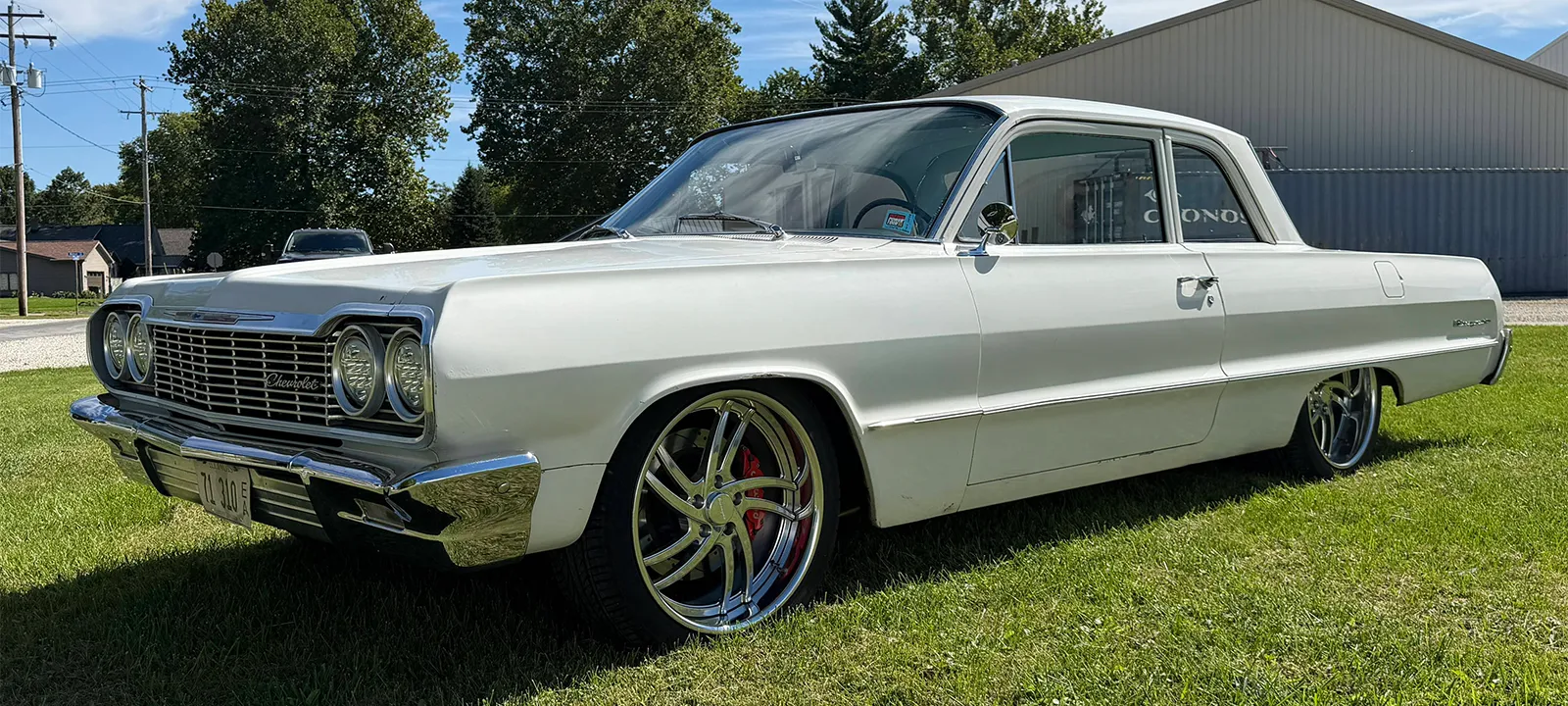
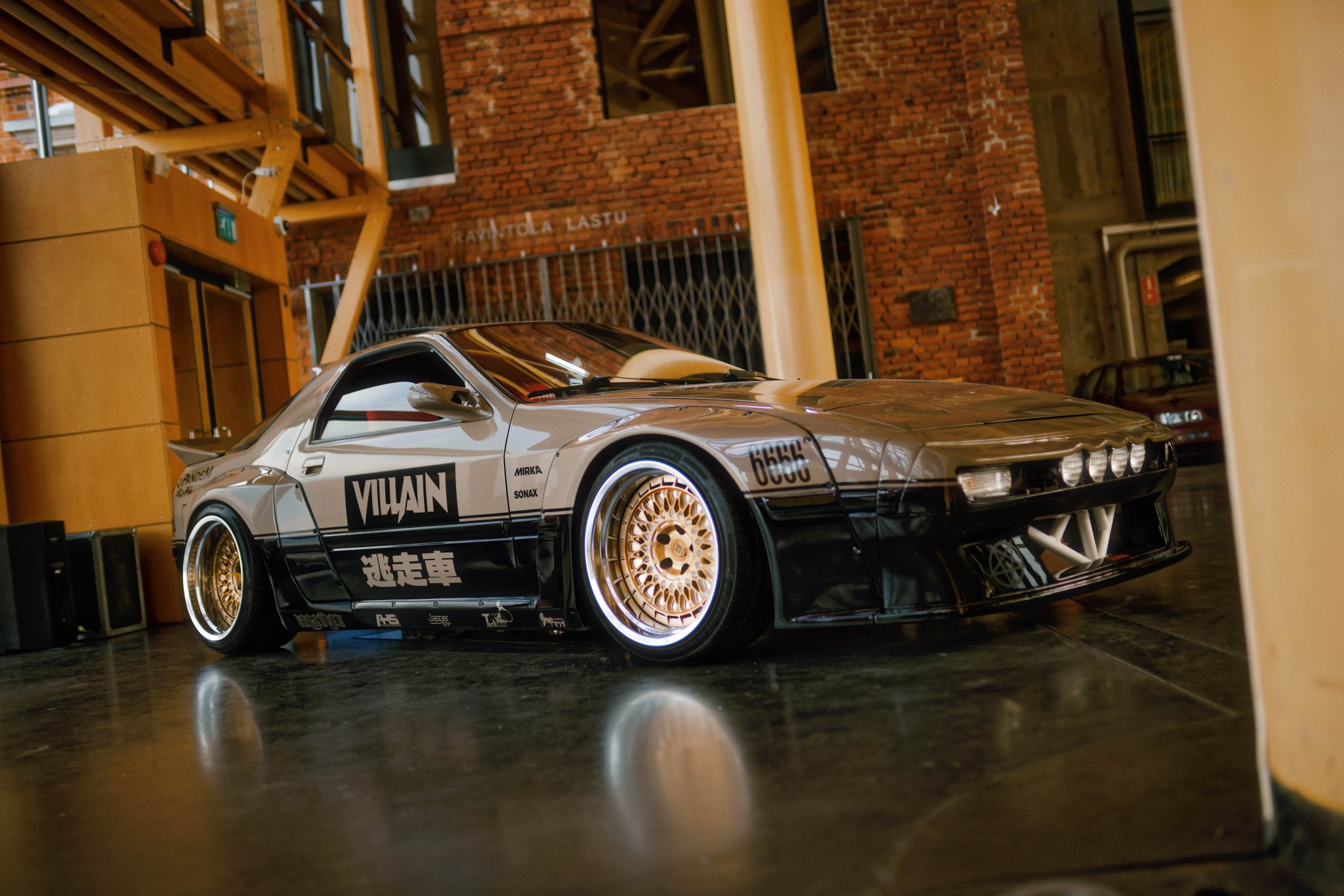
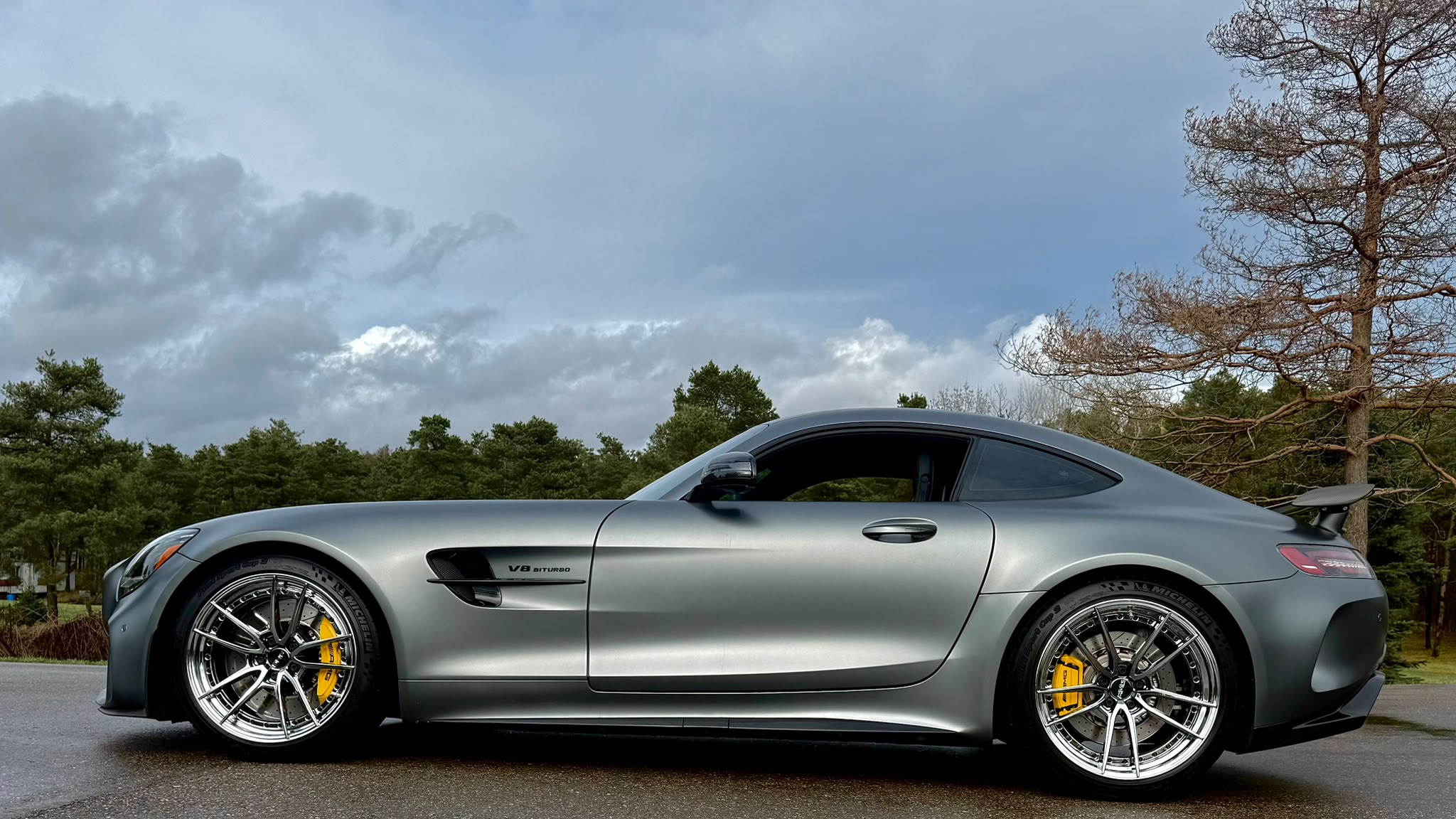
These three FcForged customer builds show two staggered arrangements: TW021 and TW023 use matching front and rear diameters with different widths, while TW022 uses different diameters and widths.
| Customer build | Wheel model | Front wheel | Rear wheel |
|---|---|---|---|
| 2018 BMW M3 Competition | TW021 mesh forged wheels | 20 × 10.5 in, ET8 | 20 × 11.5 in, ET22 |
| 2018 Mercedes-AMG GT R | TW022 split-spoke forged wheels | 19 × 10 in, ET46 | 20 × 12.5 in, ET38 |
| 1986 Mazda RX-7 FC3S Pandem | TW023 step-lip mesh forged wheels | 18 × 9.5 in, ET-35 | 18 × 10.5 in, ET-63 |
The TW021 and TW023 builds each use the same wheel diameter at the front and rear, with a wider rear wheel. The TW022 build uses a rear wheel that is both wider and larger in diameter. The larger front-to-rear offset difference in the TW023 build (ET-35 versus ET-63) shows why offset should also be recorded separately for each axle.
Each row records a specific customer car; these dimensions describe that build only. They are not a fitment recommendation for another vehicle, including another car with the same model name. Use the examples to understand the size differences, then have your own configuration confirmed before ordering.
What should you check before changing your setup?
Check the vehicle manufacturer’s requirements for your proposed front and rear wheel-and-tire combination before changing your setup.
For an all-wheel-drive vehicle, the selected tire sizes need to meet the requirements of its particular AWD system. Fitment Industries notes that AWD systems differ, so a combination used on another vehicle does not establish what will work on yours.
Wheel diameter alone does not tell you whether the tire combination meets the vehicle’s requirements. Have a qualified wheel-and-tire installer review the proposed combination against the applicable vehicle and tire manufacturer guidance, and resolve any unconfirmed requirements or tire specifications before ordering.
Prepare separate front and rear specifications
Record front and rear specifications in separate columns when preparing your wheel quote.
Use the template below for your own vehicle. Include the units with each dimension and write “To be confirmed” wherever a detail is unknown. If a vehicle detail or modification applies to both axles, enter it in both columns.
| Specification | Front | Rear |
|---|---|---|
| Vehicle (year/make/model/trim) | To be confirmed | To be confirmed |
| Diameter | To be confirmed | To be confirmed |
| Width | To be confirmed | To be confirmed |
| Offset (ET) | To be confirmed | To be confirmed |
| PCD | To be confirmed | To be confirmed |
| Center bore | To be confirmed | To be confirmed |
| Tire size | To be confirmed | To be confirmed |
| Brake or suspension changes | To be confirmed | To be confirmed |
| Notes | To be confirmed | To be confirmed |
Use Notes to distinguish existing specifications from proposed changes and identify any details still awaiting confirmation. This table is a quote preparation tool, not a fitment confirmation.
For the rest of your inquiry, use the wheel quote checklist. If you are also choosing how the wheels are constructed, see the guide to monoblock and two-piece construction. Include the front and rear columns with your request and flag any unresolved items. Request a front and rear wheel quote