By FcForged Editorial Team
What makes a wheel a true beadlock?
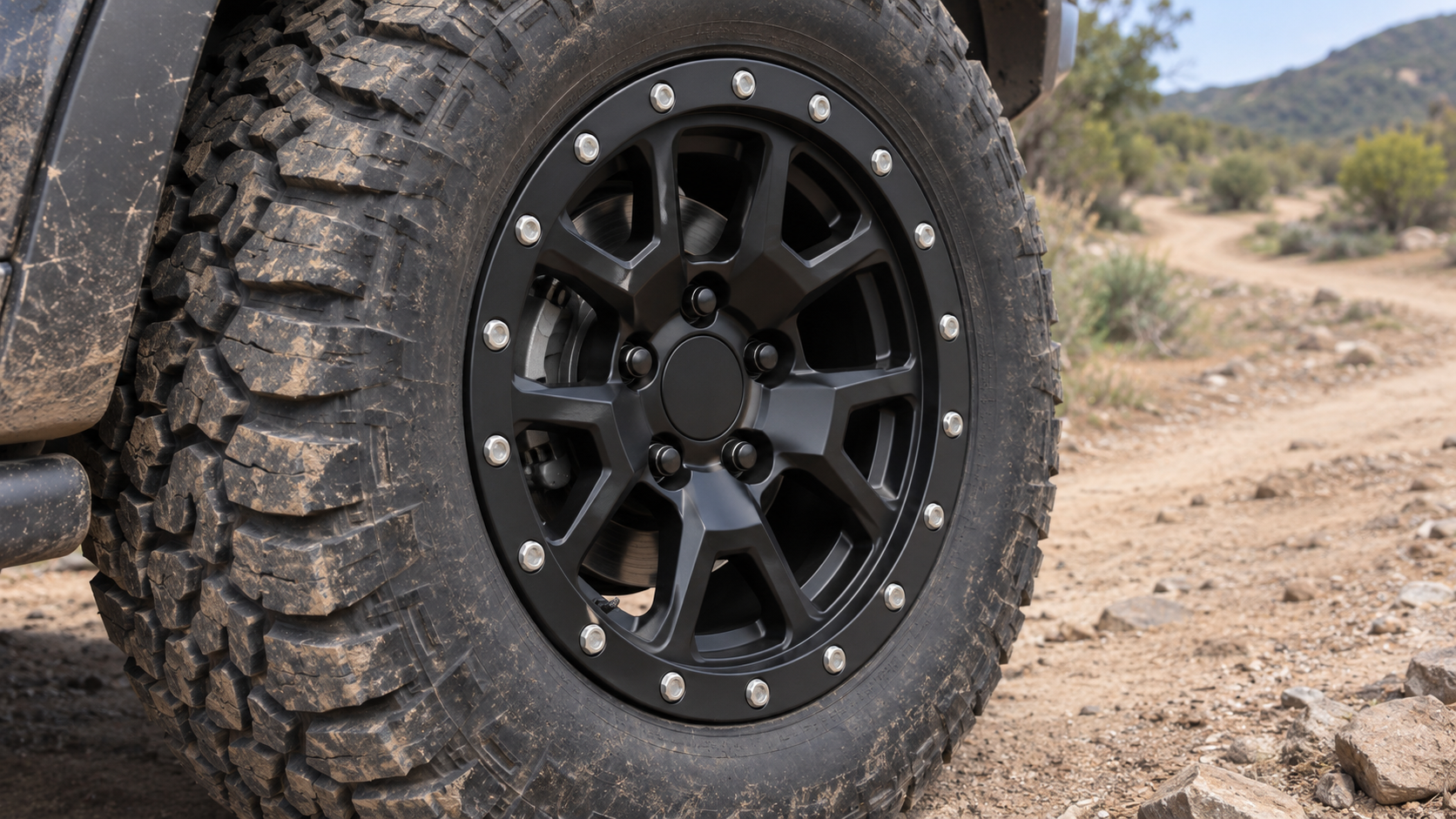
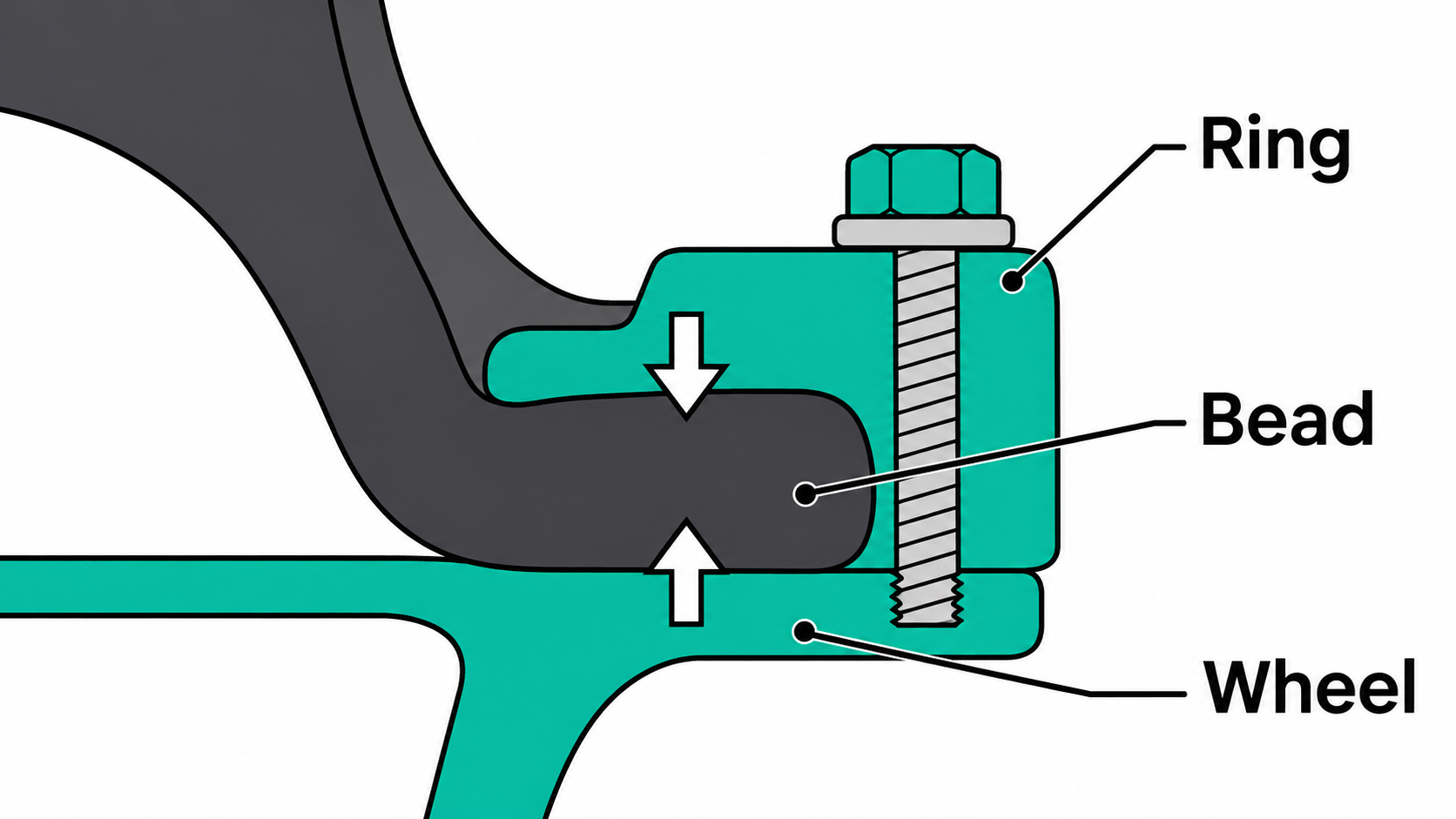
A true beadlock in a common external-ring design mechanically clamps the tire’s outer bead between a bolted ring and the wheel.
The bead is the edge of the tire that seats against the rim. KMC describes this arrangement as an outer ring bolted to the wheel face that acts as a clamp. The ring and wheel hold the bead at that clamping interface.
This explanation concerns the outer bead in a single external-ring arrangement. It does not imply that the same assembly clamps the inner bead.
When a listing uses “true” or “functional” beadlock, look for information showing this clamping relationship. The useful detail is where the tire bead sits in relation to the ring and wheel.
What does a simulated beadlock ring do?
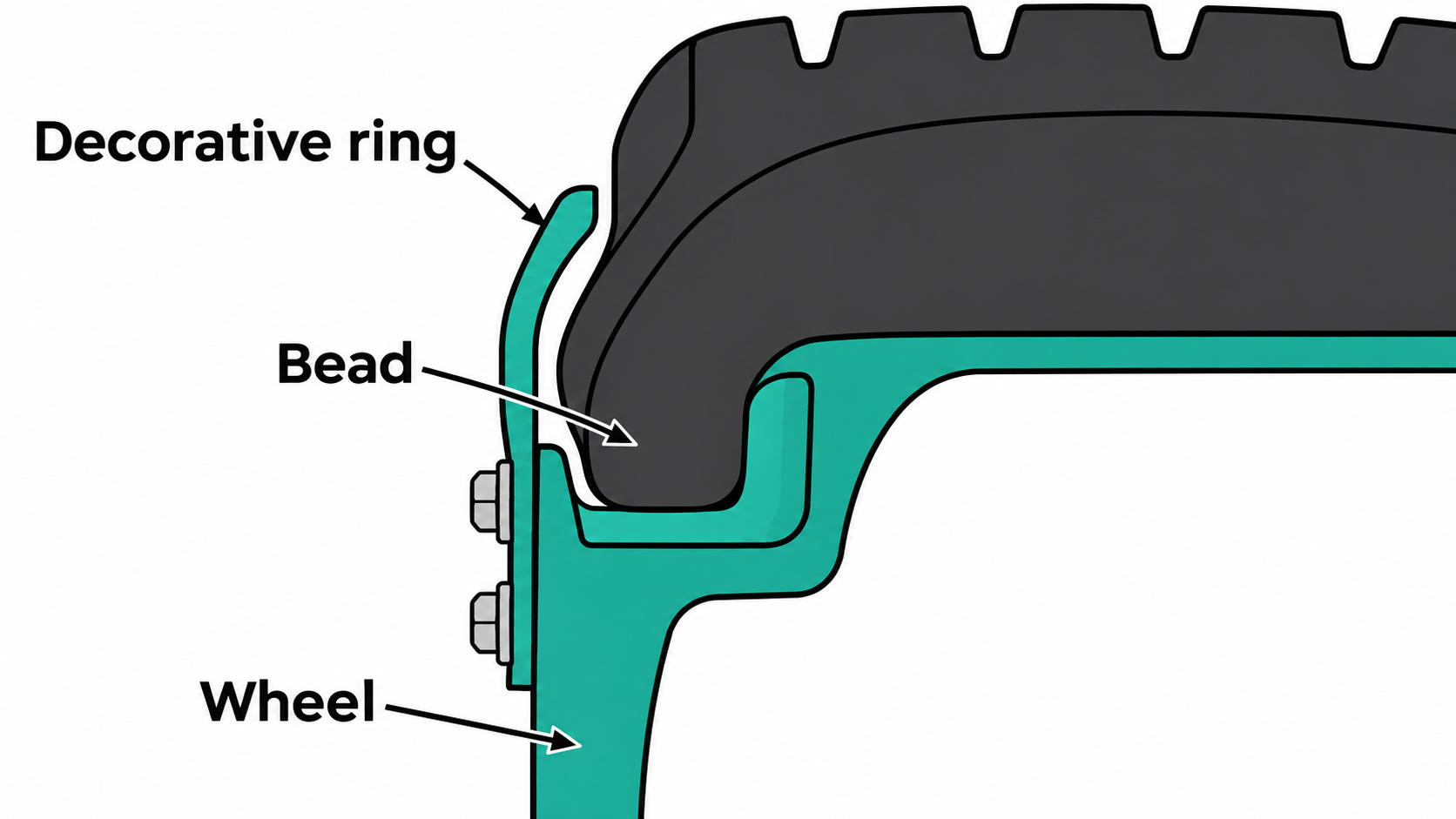
A simulated beadlock ring provides beadlock-style appearance without mechanically clamping the tire bead.
KMC’s beadlock explanation distinguishes cosmetic rings from functional bead clamping. For the design described here, the simulated ring is a styling feature; the bead is not held between that ring and the wheel in a beadlock clamp.
In the search phrase “real vs fake beadlocks,” the useful comparison is mechanical clamping versus beadlock-style appearance. The word “simulated” describes the ring’s purpose. Product authenticity and quality require separate evidence.
Exposed bolts or a removable ring, on their own, do not show whether the tire bead is clamped. Use the manufacturer’s description for the exact wheel version to establish what the ring does. Keep its attachment and care instructions with that information; the appearance alone does not establish how the hardware should be handled.
True vs. simulated: compare function and ownership needs
Compare the ring’s function, the documented bead position, and the instructions for the exact wheel version.
Use the same questions for both designs so that the comparison describes what the ring does and what information should accompany it.
| Question | True beadlock with an external ring | Simulated beadlock |
|---|---|---|
| What does the ring do? | Mechanically clamps the outer tire bead against the wheel | Provides beadlock-style appearance without that mechanical clamp |
| What should the structural information show? | The outer bead held between the ring and the wheel | The decorative ring’s position and purpose, without a beadlock clamp at that ring |
| What should the supplied-parts information identify? | The ring, fasteners, and compatibility requirements for the quoted wheel and tire assembly | The decorative parts, any supplied hardware, and their intended attachment |
| Which installation and care requirements apply? | The manufacturer’s instructions for the exact wheel, ring, and hardware | The manufacturer’s instructions for the exact wheel and styling parts |
Record whether your request calls for mechanical bead clamping or a cosmetic ring, then ask the supplier to match that request to a documented design. Keep the stated use, supplied parts, and applicable instructions together in your comparison.
If you are comparing monoblock and two-piece construction, check bead retention separately. A construction label alone does not show whether a ring clamps the tire’s outer bead.
How can you verify the design before ordering?
Ask the supplier for model-specific cross-section or assembly information showing the tire bead, ring, and wheel before you approve the design.
Use this checklist for the configuration in your quotation:
- Identify the version. Record the exact wheel model and the ring configuration being offered.
- Request structural information. Obtain a labeled cross-section or the manufacturer’s assembly description identifying the wheel, tire bead, and ring.
- Locate the bead. Ask whether the ring presses on the outer bead and which parts form the clamp. For a simulated design, request information identifying the ring’s decorative purpose.
- Identify the supplied parts. List the ring and hardware included in the quotation, with the intended role of each part.
- Match the instructions. Ask for the installation, care, and use information that applies to that exact configuration, including any stated limitations.
Where a seller offers several ring configurations, ask for documents covering the option in your quotation. A diagram for another version leaves your own classification unresolved. Review unclear details with the manufacturer or a qualified installer and request clarification before ordering.
When browsing off-road wheel designs, keep the ring function as a separate item in your request. Use the wheel quote checklist to provide the remaining vehicle and wheel details.
Send FcForged the model, proposed configuration, intended use, and any unresolved ring or hardware questions. Request an off-road wheel quote