By FcForged Editorial Team
What is the visible difference between brushed and polished wheels?
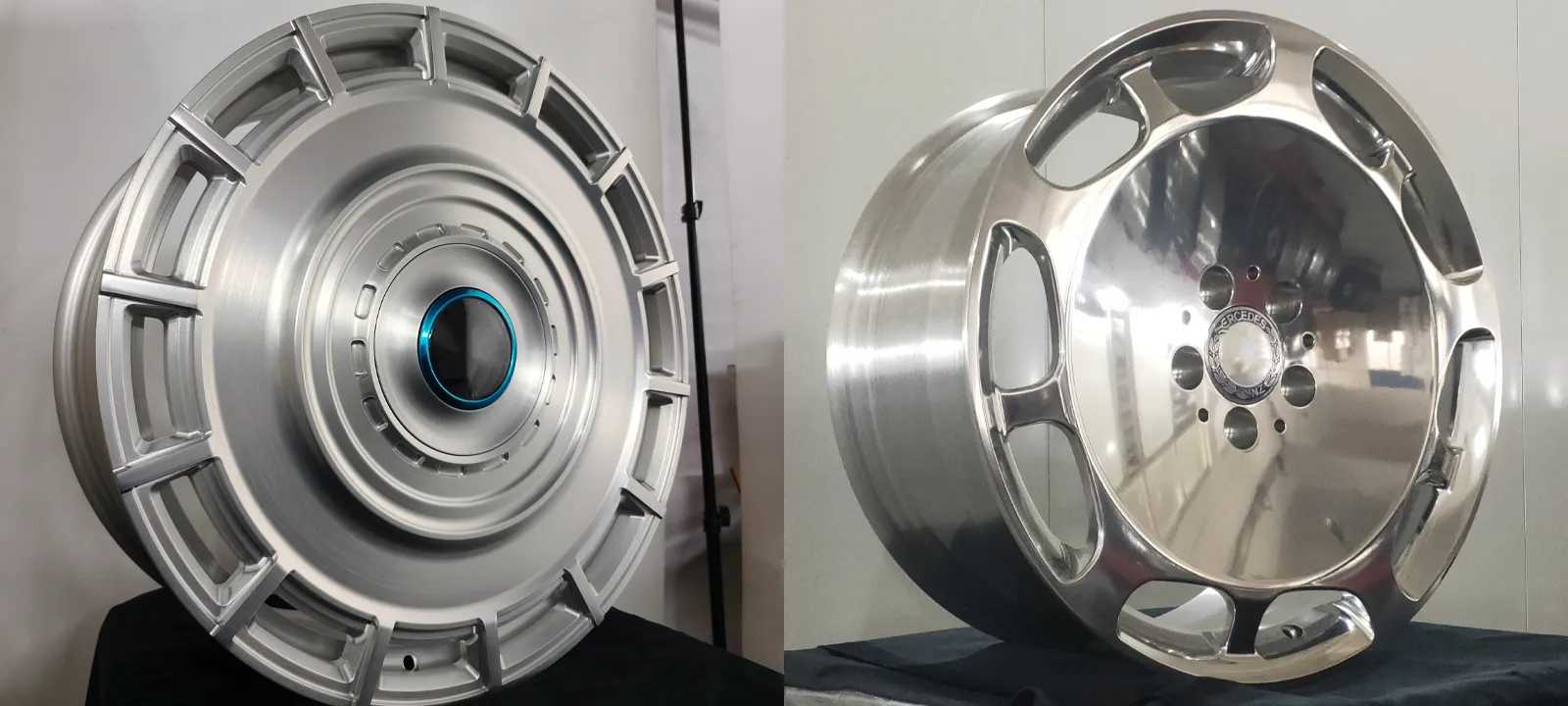
Brushed finishes show a surface texture, while polished finishes emphasize a smoother, more reflective appearance.
That distinction helps describe the look you want, but it does not specify every layer of the finish. For example, Rushforth’s finish options list a brushed-and-cleared treatment separately from full polish. Those are that manufacturer’s options, not a statement that every supplier uses the same coating system.
Use a close-up to identify the texture and a wider view to judge the whole wheel. A polished lip beside a brushed face is a different request from polishing the entire wheel. A color name also leaves the underlying texture and final sheen unresolved unless you record them separately.
Choose the appearance you want first, then ask the supplier to describe the proposed finish in writing. Avoid treating “brushed,” “silver” and “gloss” as interchangeable descriptions.
Which finish details need separate approval?
Approve the texture, color, sheen, coating and location as separate parts of the finish specification.
The following brief is an editorial way to organize those decisions; it is not a list of finishes guaranteed to be available on every wheel.
| Detail | Question for the supplier |
|---|---|
| Texture | Which surfaces are brushed, polished or otherwise prepared? |
| Color | Which named finish or approved reference should be matched? |
| Sheen | What appearance should the finished surface have? |
| Coating | What protective treatment, if any, is included? |
| Location | Which treatment applies to the face, lip, pockets and other visible areas? |
| Care | Which cleaning instructions apply to the completed finish? |
Ask the supplier to mark the boundaries between treatments on the drawing or reference image. If a recess should remain darker than the spoke face, identify that recess rather than relying on a single overall color description.
Keep the agreed reference with the order. When an image is only an inspiration photo, say which feature you want to borrow and which details should be ignored.
How does the TW023 example separate face and lip finishes?
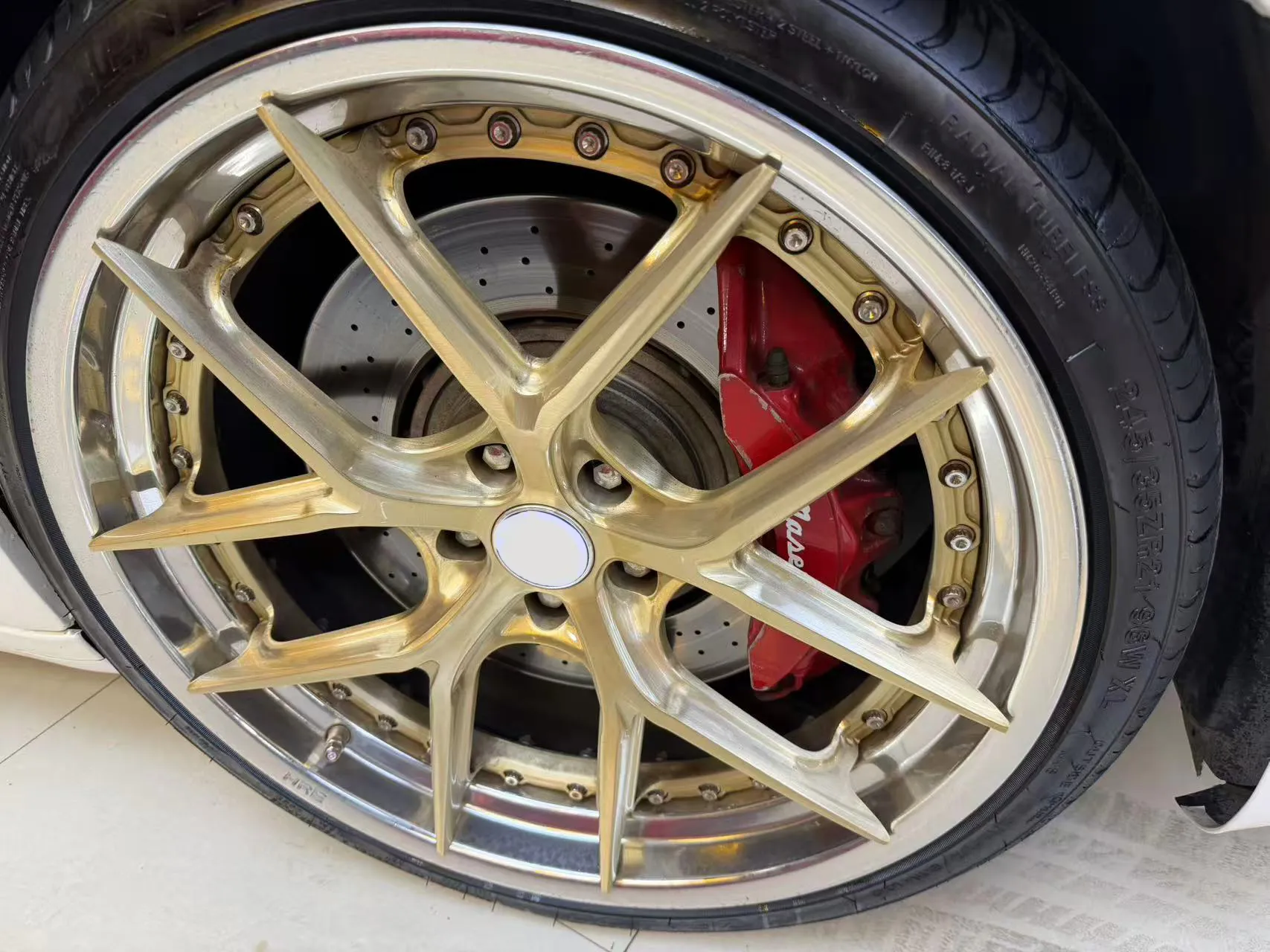
The documented TW023 example combines a brushed gold center with a polished lip, so one overall finish label would be incomplete.
The TW023 step-lip mesh wheel page records that combination for the 1986 Mazda RX-7 FC3S Pandem build. It provides a concrete reference for discussing two visible regions of the same wheel.
| Region | Recorded appearance | What the example does not establish |
|---|---|---|
| Center or face | Brushed gold | The exact coating system for a new order |
| Lip | Polished | A universal cleaning or maintenance procedure |
| Complete wheel | Contrasting face and lip treatments | Availability of every requested combination |
A useful inquiry can reference the gold brushed face and polished lip while asking the supplier to confirm the treatment of other areas. It should also identify whether that reference describes the entire intended look or only one detail.
The case is a finish example, not a durability comparison. Do not use it to conclude that one finish lasts longer or needs less care than another.
What should you compare in a finish sample?
Compare the sample with the agreed reference for texture, color, sheen and treatment boundaries.
Ask for views that show the whole face and the transition between finished areas. Keep the reference image, sample identity and supplier’s written finish description together. Where appearance differs between images, ask for clarification instead of approving a new finish name from a photograph alone.
FcForged’s sample-order guide recommends ordering the sample in the intended finish and identifying the areas where it applies. The published Vietnam sample is described as brushed black, illustrating why the specific finish should remain attached to the sample record.
For your own review, record any requested change precisely: the affected surface, the intended appearance and the reference that should replace the earlier one. If the next order uses a different treatment, have that treatment confirmed rather than treating an earlier sample as its approval.
Ask for care instructions for the finish actually supplied. A generic polishing or cleaning recommendation should not override the supplier’s instructions for that completed surface.
How do you turn a finish preference into an order brief?
Give the supplier a reference for each finish region and ask for those choices to be included in the approved specification.
A concise finish brief should identify:
- The wheel design and drawing version to which the finish applies.
- The reference image or sample for each region.
- The requested texture, color and sheen.
- The supplier’s confirmed coating description and care instructions.
- Any approved differences between the reference and the final order.
Use the custom wheel design process to connect that brief to the drawing approval. Keep a record of changes instead of leaving the final appearance scattered across messages.
The decision is then specific enough to discuss: a particular treatment on a particular part of a particular wheel. Send the finish references with your vehicle and wheel requirements. Discuss a custom wheel finish