
By FcForged Editorial Team
What should a wheel test report identify?
A useful wheel test report should let you identify the tested wheel, the test performed and the result that applies to that specimen.
Start by matching the document to your order instead of judging the cover page. Ask for the report reference, issuing organization, specimen identifier, relevant specification, test method and stated result. Where information is contained in an attachment or a manufacturer’s explanation, keep that document with the report.
This is a buyer’s document check. It does not replace a laboratory’s interpretation of results or establish which standards apply to a particular market or vehicle.
| Evidence item | What to ask it to establish |
|---|---|
| Specimen or design identification | Which wheel or design revision was evaluated? |
| Size and mounting specification | How does that configuration relate to the order? |
| Method and conditions | What procedure and conditions produced the result? |
| Outcome and limitations | What conclusion is actually stated? |
| Issuer and document reference | Who issued it, and how can its identity be checked? |
Do not fill a missing field by copying a specification from another wheel in the same catalog. Ask the supplier to explain the connection explicitly.
How is a simulation different from a physical test?
A simulation describes an analysis of a model, while a physical test records an evaluation performed on a specimen.
FcForged’s published M013 wheel description makes that boundary explicit: its FEA visualization applies to the analyzed configuration and loading conditions. The description asks buyers to check the design revision, material assumptions and loading conditions, and states that a simulation image does not replace required physical testing.
Use that distinction when requesting evidence. If the supplied item is an FEA image, ask for the scope of the analysis rather than calling it a test certificate. If the claim concerns a physical test, ask which specimen and report support it. Keep the two items separately identified in the order file even when they concern the same design.
For an overview of the production checks discussed elsewhere on the site, read the forged wheel inspection guide. This article focuses on connecting evidence to an order, rather than describing the inspection workflow.
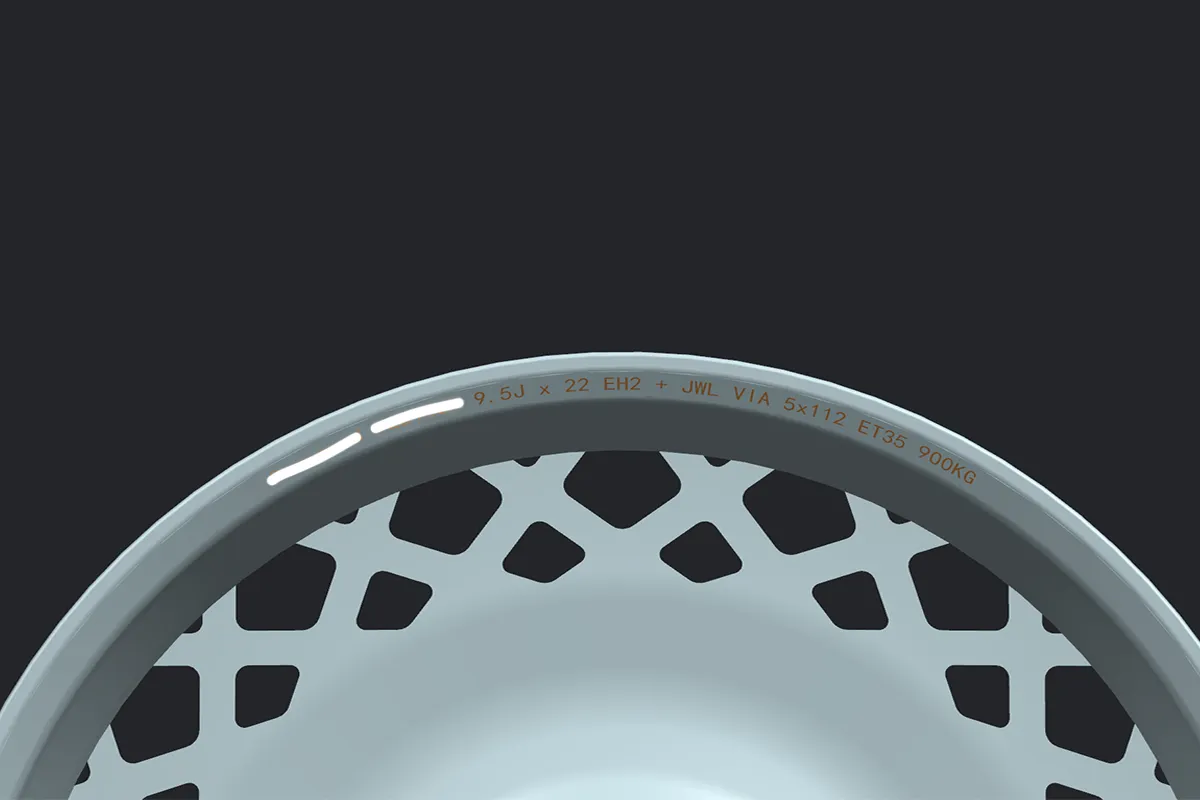
What do JWL and VIA references actually tell you?
JWL and VIA refer to different parts of the wheel-conformity and registration process, so they should not be treated as interchangeable labels.
The Japan Light Alloy Automotive Wheel Testing Council’s official Q&A describes JWL marking in connection with manufacturers’ own testing and conformity to the applicable Japanese technical standards. It describes VIA as a third-party registration system and states that only registered products may carry the VIA mark.
That explains the terminology; it does not verify a particular supplier’s product. Ask which wheel and specification a claimed registration concerns and how the claim can be checked with the relevant organization. A logo shown elsewhere in a catalog does not answer that question for your order.
This guide does not claim that a specific FcForged wheel has a particular registration or that a marking establishes approval for every market or use.
How can you match evidence to the configuration you are ordering?
Build the comparison around the final drawing and ask the supplier to explain every difference between that configuration and the evidence provided.
M013 offers a useful example of how to frame that request. Its published description identifies a pocketed six-spoke design and asks for the proposed wheel specification and intended use when discussing simulation scope. Naming M013 alone therefore does not identify all the inputs of an analysis or the specimen of a physical test.
| M013 order information | Evidence question |
|---|---|
| Selected design and drawing revision | Does the evidence identify this design revision? |
| Ordered diameter and width | Which dimensions were analyzed or tested? |
| Mounting specification | How does the evaluated configuration relate to the requested one? |
| Intended use and available load information | What conditions were included, and what remains outside the stated scope? |
| Supplied FEA visualization | Where are the assumptions and results explained? |
This table is a request framework built from the published M013 brief. It is not a completed test record and does not assert a result for any M013 configuration. If the supplier relies on evidence from a different configuration, request the technical basis for that application and have the appropriate reviewer assess it.
What should you request before accepting an evidence package?
Request a traceable explanation of what each document establishes for the wheel you intend to order.
Ask the supplier to provide:
- The final wheel specification and drawing revision.
- The available report or analysis references, with their issuing organizations.
- The specimen or configuration covered by each item.
- The stated result, conditions and limitations relevant to the request.
- An explanation of any difference between the evidence and the order.
- A way to verify a claimed registration with the organization responsible for it.
If a document is incomplete or a reference cannot be reconciled, keep that issue open rather than converting an assumption into an approval. Have a qualified technical reviewer assess conclusions that require engineering judgment. This guide helps organize the questions; it does not authenticate a report or issue a certification.
Include the evidence request with the dimensions and intended application in your wheel quotation details. Request a quote and configuration-specific evidence