
By FcForged Editorial Team
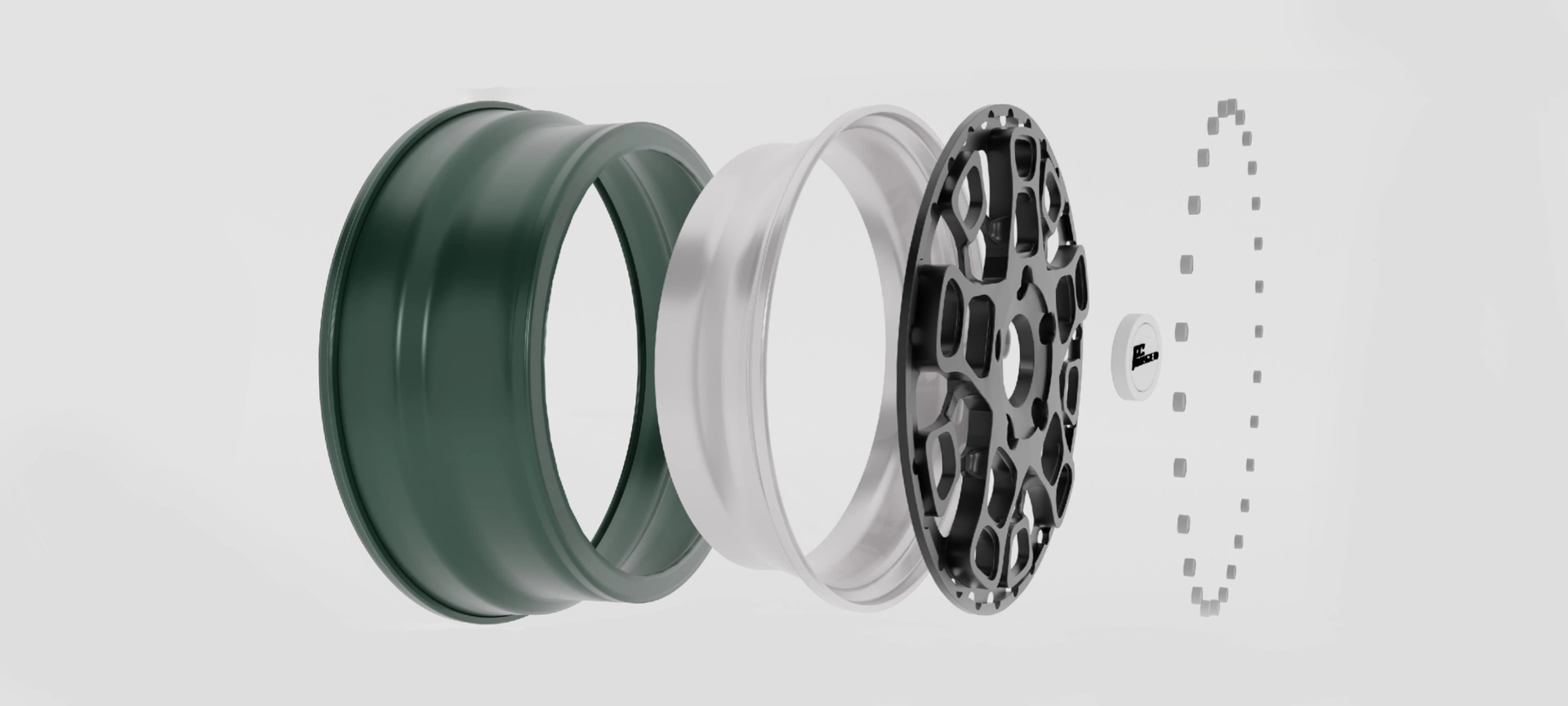
Custom forged wheel design starts with a look you want and develops into a drawing and specification you can approve. Spoke style, face profile, lip, finish, and center cap all deserve attention—but each choice needs to work with the vehicle and the proposed wheel configuration.
Before asking for a design, decide which visual details matter most, share the vehicle requirements, and identify what must be checked before production. This guide follows the design decisions from the first reference images to one approved version for manufacturing.
Turn Your Inspiration into a Clear Design Brief
Start by explaining whether you want to adapt an existing wheel design or develop a new visual concept. If you are still exploring, browse existing FcForged wheel designs and identify the details you would keep or change. A reference becomes more useful when it has a specific note attached.
Describe the spoke arrangement, the shape of the openings, and how the spokes meet the center and outer edge. For example, “retain the split-spoke layout, simplify the center area, and avoid exposed hardware” gives the designer a clearer direction than “make it more aggressive.” This is an illustrative brief, not a confirmed production option.
| Design decision | What to put in your brief |
|---|---|
| Spoke layout | Identify a preferred pattern and mark the details you want to retain or change. |
| Overall character | Describe the goal: understated, open, dense, angular, or another clear visual direction. |
| Face and lip | State which matters more: a recessed face, a visible outer lip, or a particular overall profile. |
| Priorities | Separate essential features from preferences you can revise after the fitment review. |
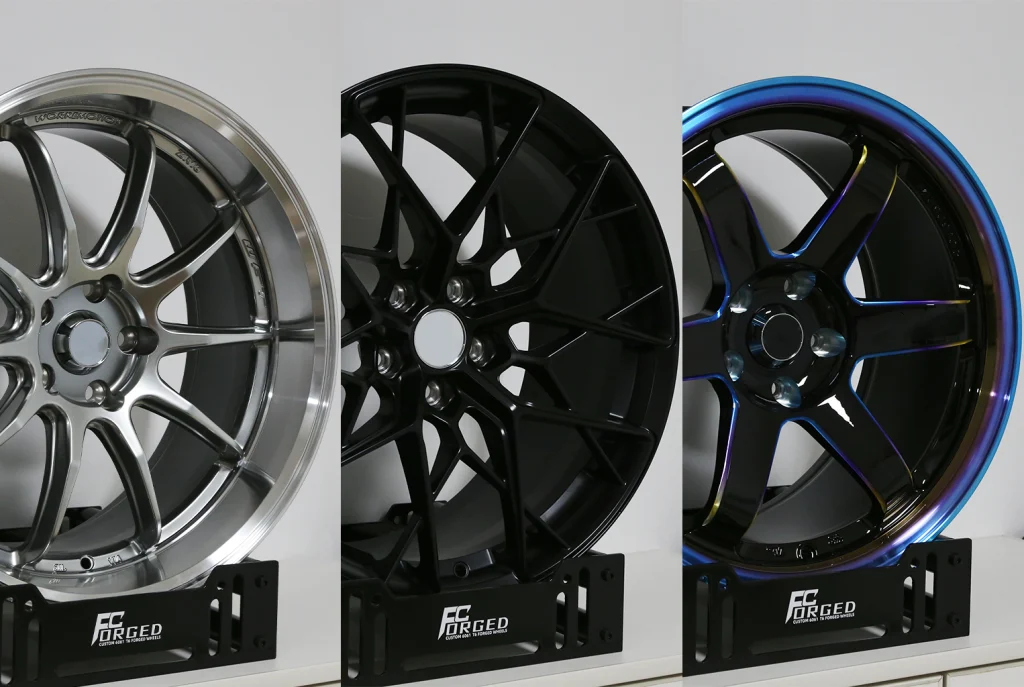
Include a front view and an angled view when available. If several references show different ideas, label each one by purpose: spoke pattern, finish, or lip appearance. Ask FcForged to confirm which elements can be combined in the proposed design.
Set Concavity and Lip Goals Around the Vehicle
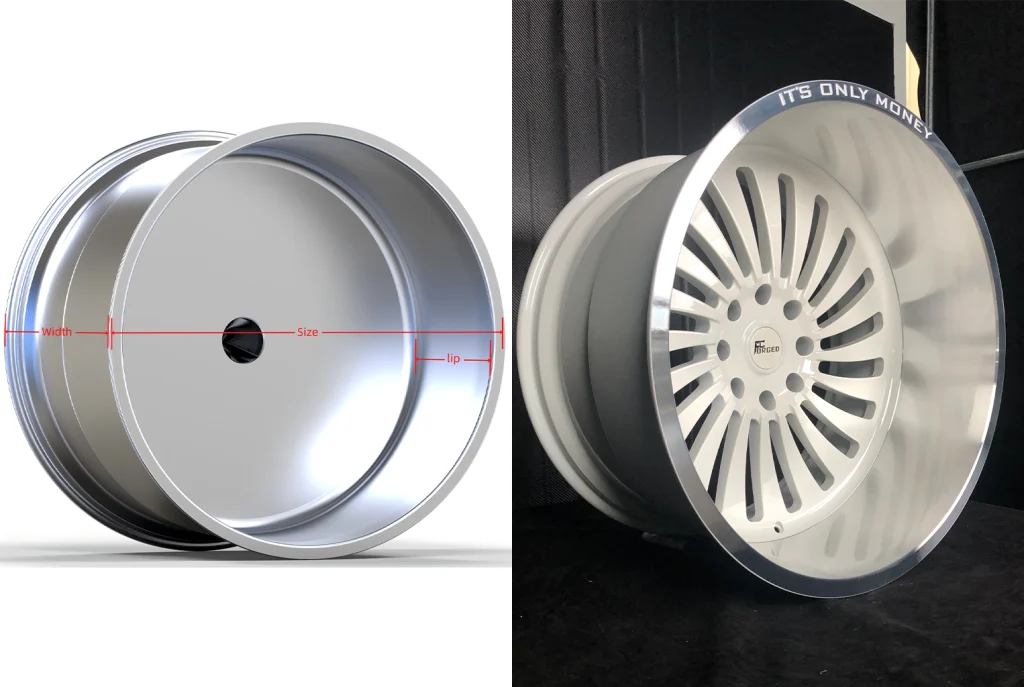
Treat concavity and lip depth as design goals to evaluate, rather than dimensions to copy from another car. Concavity describes the inward profile of the wheel face; the visible outer lip is a separate feature. Ask to see both in the proposed configuration.
FcForged evaluates the final face, lip, construction, and fitment against the project requirements. Wheel diameter, width, offset, brake setup, and load requirements need to be considered together. A photo of another build does not establish that its profile is available for your vehicle.
If the front and rear specifications differ, request separate confirmation for each axle. Ask whether the front and rear faces will look the same, and how any difference will appear on the car. Do not assume that a rear-wheel reference also represents the front wheel.
Use the custom forged wheel quote checklist to prepare the vehicle and brake information needed for this review. Here, the design decision is how the proposed face and lip will look within the configuration FcForged confirms for the project.
Specify the Finish and Center Cap Together
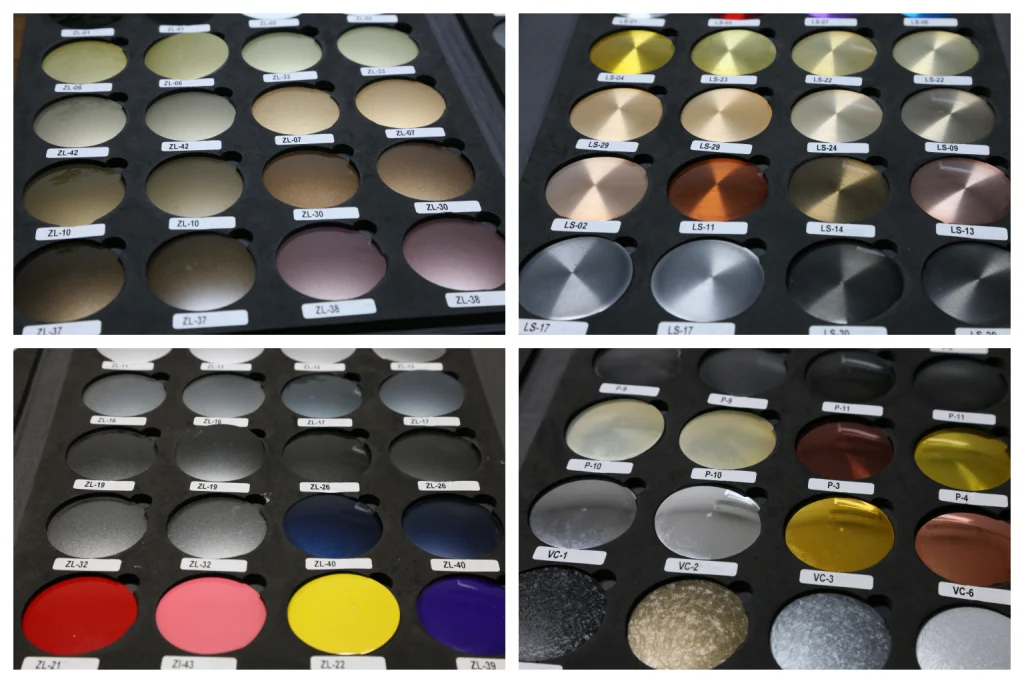
Describe where each finish belongs, and use an actual sample or confirmed reference to discuss the appearance. “Black with polished details” leaves several decisions open: which surfaces are black, which are polished, and what appearance you expect from the center cap.
FcForged’s finish options for discussion include gloss, satin, matte, brushed, polished, and custom colors. The available combination, color result, cost, and schedule must be confirmed for the project. A finish name alone is not a complete appearance specification.
Mark the face, spoke sides, lip, and center cap on a reference image where relevant. If the construction includes visible hardware, specify its intended appearance as well. For a custom logo cap, provide the artwork and ask to review its size, orientation, and placement with the wheel design.
Use photographs of actual samples under comparable lighting to discuss subtle differences. Treat a screen rendering as a visual reference; ask which sample or approved finish reference will govern the order. If you want a match to the vehicle paint or another component, explain that requirement before accepting the design. The outcome of this review should be a recorded appearance choice and surface assignment that manufacturing can follow.
Review the Rendering and the Specification Together
Review the appearance and the technical specification as connected parts of the same proposal. A rendering helps you judge the design, while the accompanying drawing and specification identify what you are being asked to approve.
FcForged’s documented process places vehicle and specification review before the designer prepares the drawing or rendering. The customer then checks the design and confirms the final drawing and specifications before production.
| What to review | What to confirm alongside it |
|---|---|
| Spoke pattern and face profile | The agreed design revision and any separately specified front and rear versions. |
| Concavity and visible lip | The proposed dimensions, construction, and profile for each wheel configuration. |
| Wheel shown on the vehicle | Actual vehicle, brake, and fitment requirements; a visual mockup alone does not confirm clearance. |
| Finish and center cap | The approved finish reference, surface assignment, and cap artwork. |
A confirmed FcForged project: The finished wheels and specification sheet below belong to the same project. The photos show the completed result; the sheet records the agreed wheel specifications and appearance requirements.
When reviewing your own custom forged wheel design, match the front and rear versions, finish details, and center-cap requirements to the same proposed revision. The sheet should make clear which configuration each image represents. The values in this example apply only to the project shown; its finished-wheel photos illustrate the recorded design outcome, not a dimensional inspection report.
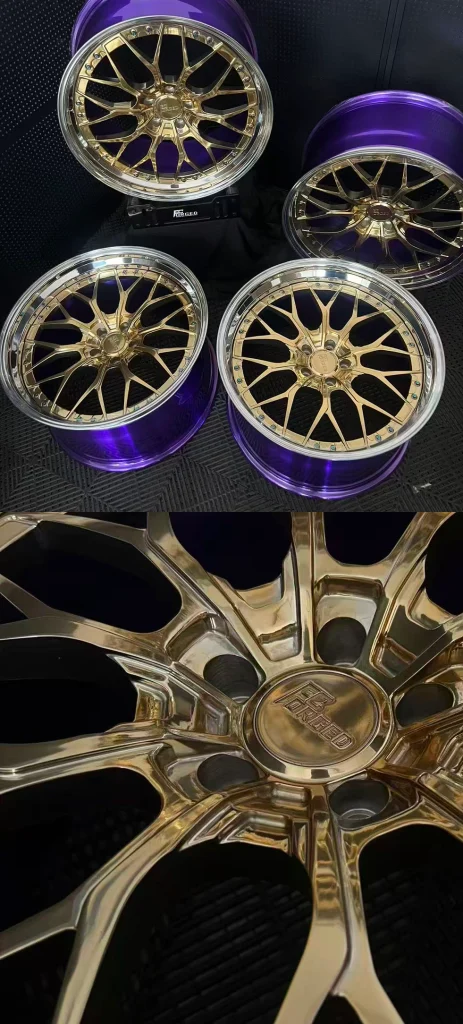
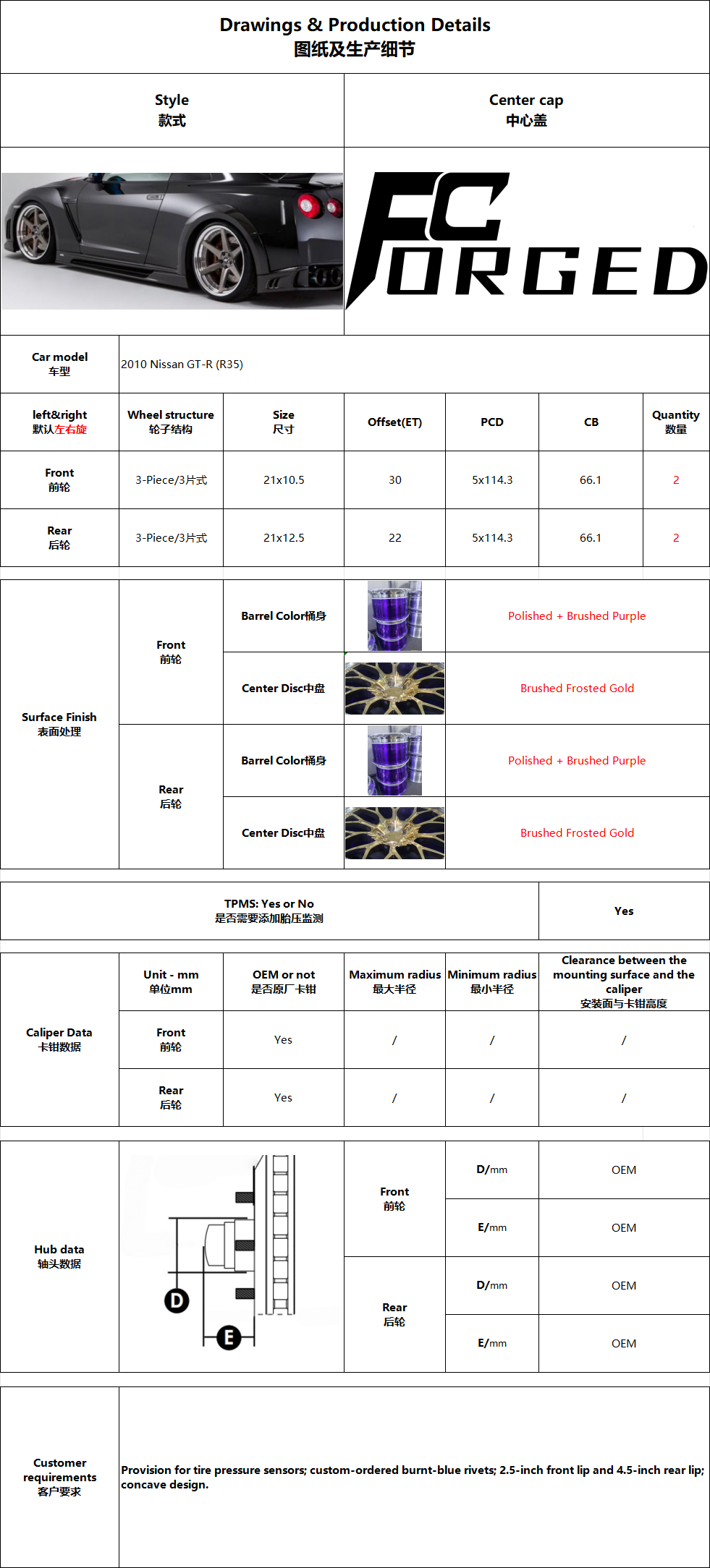
Left: finished wheels. Right: the specification sheet for the same FcForged project. These specifications apply to this project only.
Select either image to enlarge it, or open the full-resolution project specification sheet in a new tab to zoom in on the details.
Make comments specific enough to act on. “Use the spoke layout from revision B, with the cap artwork from revision C” still requires a consolidated final version. Ask to see that combined result before approving it. If a detail is missing or unclear, have it added or explained rather than assuming the production team will infer your preference.
Approve One Final Version for Manufacturing
Keep the final design and specification together, with a clear revision identifier and approval date. This gives you and the supplier one reference for what has been agreed. If a shop or brand is coordinating the order, identify who is responsible for reviewing the technical details and who can approve the final design.
Use this checklist before sending your approval:
- Design: The spoke layout, face profile, lip, and visible details match the agreed version.
- Specifications: Front and rear requirements are clearly identified, including diameter, width, offset, bolt pattern, and center bore.
- Vehicle requirements: The outcome of FcForged’s fitment review and any design constraints are recorded for the proposed configuration.
- Appearance: Finish references, surface assignments, center cap, and any visible hardware are recorded.
- Approval record: The final revision, approval date, and person responsible for approval are clearly identified.
FcForged requires confirmation of the final drawing and specifications before production begins. The approved design package becomes the reference for manufacturing. If you request a later design change, the team must confirm whether it is possible; changes after production starts may add cost and affect the schedule.
Ready to develop your idea? Send FcForged your design brief, with vehicle details, reference images, preferred finish, and the features that matter most to you. The next step is to establish a feasible design direction and confirm the information needed for your project.